

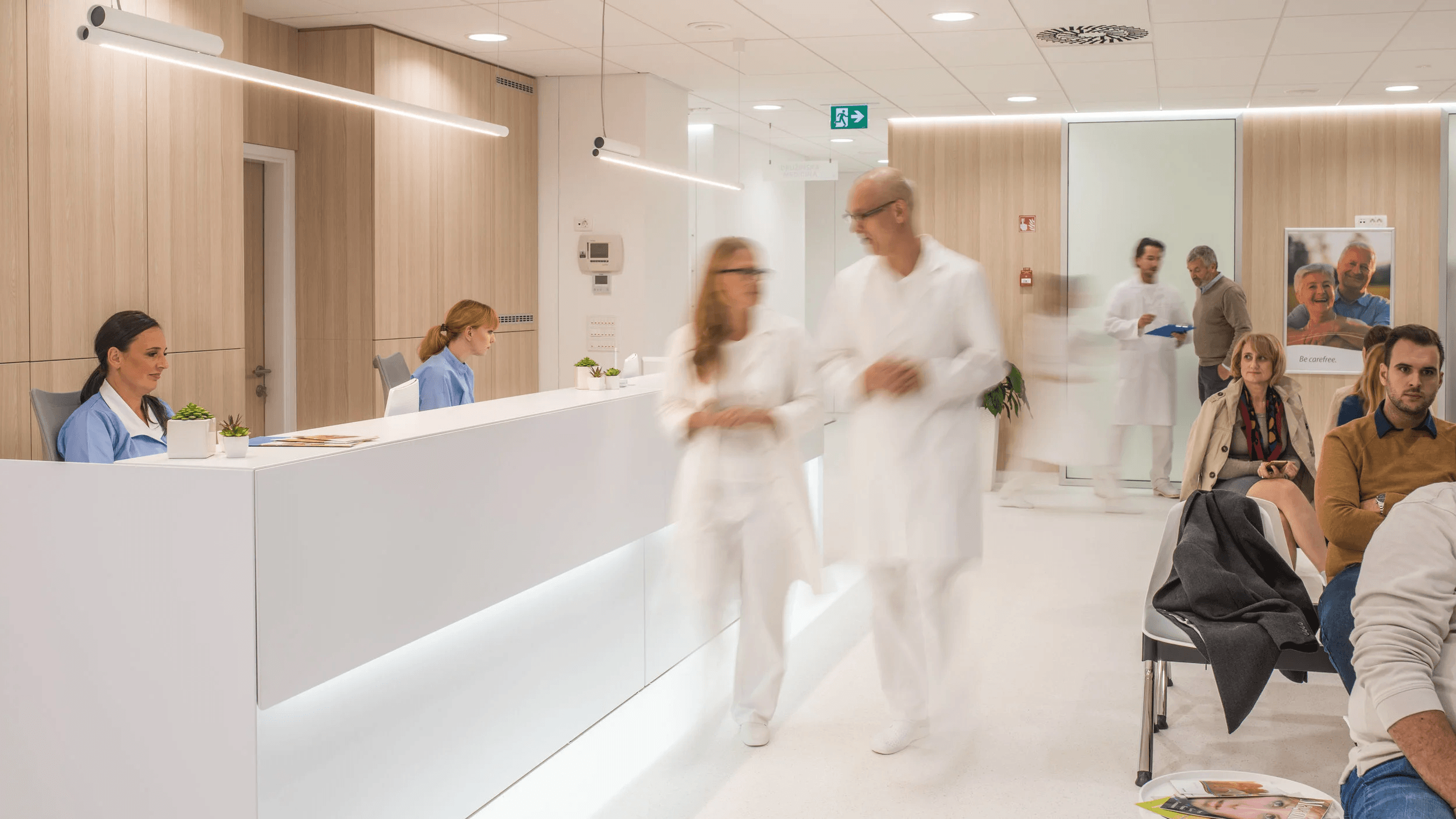
Family medicine clinic
Your personal doctor – comprehensive care, preventive check-ups, prescriptions and referrals.
Scope of services
Publicly fundedSelf-payA doctor who knows your story
When a doctor has looked after you for several years, they know which medicines you take, when your blood pressure was last measured and how you got over last year's pneumonia. That history changes the conversation in the clinic. A new problem has context, comparison with earlier results is immediate, and many questions do not need to be asked again.
The family medicine clinic covers a very wide range of illnesses: acute illness, monitoring of chronic conditions, preventive check-ups, prescribing and coordinating medicines, and referrals to specialists. The family doctor is also the one who gathers results from different parts of the system and brings them together into a whole – often this is the only place where all the information about your health comes together. Care is holistic and takes into account the physical, mental and social side of a problem.
We see adults aged 18 and over. The work takes place in two practices, following modern principles of family medicine. When several members of the same family attend the same clinic, coordinating check-ups and treatment is usually simpler.
What you can book an appointment for
Fever, cough, sore throat, a runny nose, abdominal or lower back pain, a rash, long-lasting tiredness, feeling unwell without a clear cause. These are the most common reasons for a visit, and each of them is a good enough reason to book an appointment.
The other part is above all an important part of preventive medicine and helps to detect and manage any chronic conditions or diseases. Monitoring high blood pressure, diabetes, cholesterol or thyroid disease means regular check-ups, adjusting treatment and repeat prescriptions for long-term medicines. This also includes blood tests, explaining laboratory results and preventive check-ups.
The family doctor assesses temporary inability to work (sick leave) and, if needed, starts the procedure for a disability assessment. They also issue absence notes and various medical certificates, and give advice before travelling abroad when it comes to vaccinations and protection.
If you have chest pain, severe shortness of breath, sudden weakness on one side of the body, difficulty speaking or impaired consciousness, or a severe, sudden pain, call 112 and do not wait for your booked appointment. The same applies to any other form of sudden severe weakness or impairment with no clear cause.
Tests and vaccinations at the clinic
Some tests are done right at the clinic: an ECG, spirometry, which checks how well your lungs work, and an ankle-brachial index measurement, which shows whether blood flow to the legs is reduced. Whether a test is needed is decided by the doctor based on your symptoms.
Preventive check-ups are aimed at the early detection of chronic non-communicable diseases such as high blood pressure, diabetes and high cholesterol. Blood samples for laboratory tests are taken in cooperation with the Institute of Microbiology, the Institute of Clinical Chemistry and Biochemistry at the Polyclinic and Biolab.
The clinic also gives various vaccinations. Some of them are self-pay, for example vaccination against tick-borne encephalitis or against flu. Which vaccination makes sense for you and whether insurance covers it will be explained at the clinic.
Public health insurance (ZZZS) and self-pay visits
The clinic works under the public health insurance scheme of the Health Insurance Institute of Slovenia (ZZZS) and also on a self-pay basis. If you register with us as your chosen personal doctor (GP), your care is provided under compulsory health insurance. You register by signing a declaration choosing your personal doctor at the clinic.
The self-pay route is for anyone who is registered with another doctor but would like a consultation, a second opinion or treatment for an acute problem. You do not need a referral for a self-pay visit; you can book directly.
A referral to a specialist is issued by your chosen personal doctor (GP). If you are not registered with us, you receive a report and a recommendation at the self-pay consultation, and you arrange a referral covered by insurance with your own personal doctor.